Monday, October 2, 2017

Reporting from 2017's UNWTO Conference

Doha, Qatar is 2017’s host for the annual U.N. World Tourism Organization’s event. This year’s theme is “sustainable tourism.” Qatar seeks to attract tourists through its impressive pearl diving, oil drilling, and falcon raising heritage. 
Is that Wayne or Garth with his backstage pass? 
I’ve never attended a UNWTO event. The format is similar to most conferences—a keynote speaker, several other speakers, different panels, then dinner. The host country has an opportunity to advertise itself and demonstrate its capacity to entertain other countries and large organizations.
Main hall in Sheraton Grand Doha
Think of it as Middle Eastern hospitality on a large scale—one country invites a guest and proudly shows off its home, and the next year, it accepts a reciprocal invitation. The events work smoothly because each guest knows it will be a host one day, and each host wants to take advantage of its time to impress other guests.

Taleb Rifai, the current UNWTO Secretary General, was this year's keynote speaker. He’s an impressive orator, peppering his speech with the phrase, “My friends,” and speaking in such a way that you sincerely believe he is speaking directly to you, his dear friend.
The one and only Taleb Rifai
He praised Qatar for being the “most open country in the [Middle Eastern] region”—Qatar recently waived visas for many countries—and lauded tourism’s many economic benefits. Rifai’s most interesting comment related to “tourism phobia” in European cities like Barcelona and Venice. Despite local complaints about tourism, according to Rifai, just one hour outside these cities exist wineries and scenery more impressive than the city centers themselves, but no one visits and so they remain undiscovered. Thus, the future of sustainable tourism appears to involve greater diversity of locations and better marketing for undiscovered gems. All countries now recognize that only developing beachfront property isn’t a sustainable approach to attract tourism and investment long-term. Consequently, the UNWTO’s members plan to use tourism to develop smaller cities and to spread tourist dollars more equitably. The really difficult question, especially if you're wary of government interference in private markets, is this: if you're a developer or hotel management company, how does a country convince you to build in a smaller location, where the number of expected tourists are much smaller than in a city center? 

I asked how Qatar planned to attract tourists from all income levels, given its relatively expensive food and accommodation prices. My answer would have involved something about Doha’s world-class service and its excellent value for money when considering the level of accommodation and quality of sites, especially its museums. The gentleman answering my question referred to airline partnerships and making the cost of travel cheaper. (WOW airline, for example, offers cheap flights from major California cities to Iceland and is expanding its U.S. presence.)

I wasn't impressed with his unimaginative response. Countries in more expensive developed countries ought to subsidize accommodation for tourists younger than 27 years old as well as city-wide bus tours to encourage a wide variety of tourists. For example, Abu Dhabi’s bus tour was about 70 USD, so I skipped it, perhaps missing an attraction or two I could have recommended to my friends and readers—other potential tourists. The subsidies could be as simple as tax credits for hostels with the subsidy/credit required to go towards upgrading or maintaining specific items such as security, lockers, and/or beds. The hostel would be required to charge a lower rate in exchange for the subsidy but would still have to make a profit to stay in business, thereby encouraging excellent customer service. Who knows? Maybe a few young tourists will enjoy a destination so much, they will apply to local grad schools and pay non-resident tuition rates. My point? The benefits from exchanging ideas spontaneously and freely amongst curious people, especially young people, cannot be measured in dollars and cents, especially not short term. If free markets are concentrating CAPEX in ways that guarantee unwelcome saturation, it's time for everyone to sit down and think outside the box. 

In any case, other than Taleb Rifai, the highlights were listening to Qatar Airways’ CEO, Akbar Al Baker, on one of the panels (he’s very, very direct and has a wicked sense of humor); hearing a string quartet at the sponsored dinner; and holding a falcon carefully on my arm. I also enjoyed meeting Croatia’s State Secretary of Tourism, Frano Matusic. (Did you know Croatia derives 20% of its entire GDP from tourism?) 
CEO Akbar Al Baker
Much to my lament, I didn’t hear any cutting-edge ideas at the conference, perhaps due to the current Saudi-led and American-instigated blockade against Qatar. Dubai may be one of the world’s most traveled destinations, but to prevent tourism from becoming a “winner-take-all” game, the GCC should cooperate and market a multi-country tour. Individually, between Abu Dhabi, Oman, Brunei, and Qatar, only Oman currently has enough unique items to warrant an extended visit, and the battle to outdo each other in architectural wonders can only go so far.

Even Dubai has reason to be concerned. Most people will visit Dubai only once, and if its future requires unlimited funding for the latest new gadget or building design, its tourism strategy is not sustainable. Thus, a sustainable tourism future for all neighboring countries, not just GCC ones, will involve much greater cooperation on all levels—security, planning, trade, and visas. Such cooperation, if done properly, should lead to more individual freedom across borders, as local countries temporarily swap visiting police, academic, and military workers to increase cultural understanding and share more information, lowering overall security costs and preventing a divide-and-conquer strategy.

Indeed, as far as I know, no one wants to imitate Chinese-style “tourism,” where visitors are herded into buses like cattle, given strict time limits at each destination (which inevitably leads to accusations of bad behavior—you’d take all the shrimp at the buffet, too, if you were hungry and afraid the bus would leave without you), and shown the kind of tour only North Korean travel agencies would appreciate. The Chinese travel this way to maximize their safety, especially because of the language barrier outside China. Sadly, if this “controlled tourism” approach continues, China may not produce another Jack Ma (aka Ma Yun), who gained his English-speaking skills and maverick style by seeing the world, especially Australia, on his own. 

In its final evaluation, if tourism cooperation is done properly, the costs of technological innovations—such as biometric passports and eye-scanning airport machines—will be shared across neighboring governments and less money will eventually be spent on security, especially weapons purchases. As more discretionary rials are freed for other purposes, governments, citizens, and private companies will feel more comfortable opening long-term visas and cross-border investments directly to ordinary individuals--not just through corporations, universities, and institutions. 

The key is to balance security and privacy. Thus far, the pendulum has shifted so far towards security, there is no doubt Eisenhower’s famous warning has come true. The true test of sustainable tourism will be whether it reverses global spending trends post-9/11 and creates, as much as possible, a world where the Chinese feel safe traveling as individuals. After all, who wants a world without another Jack Ma?

© Matthew Mehdi Rafat (2017)

Saturday, September 30, 2017

Qatar: It's Getting Hot in Here

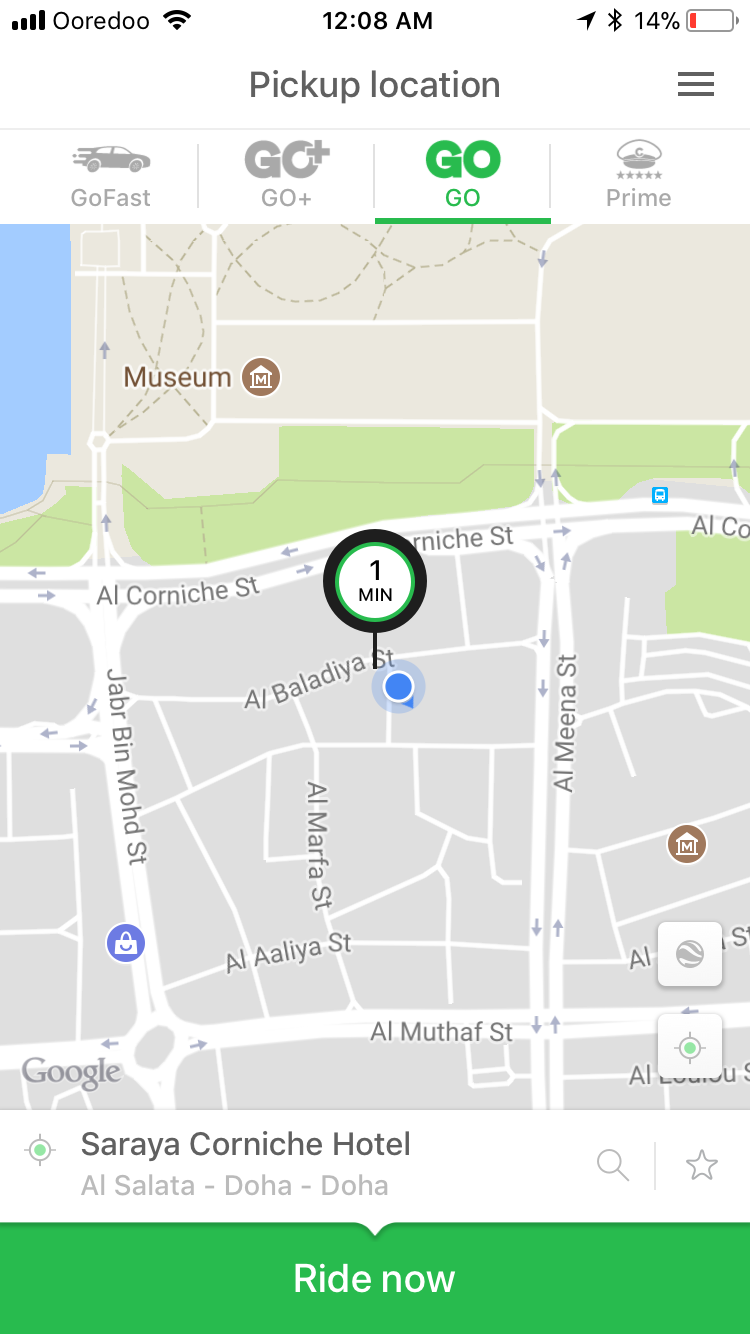
Doha, Qatar is hot. Really hot, even in September. Prepare to use Uber and Careem apps a lot. Careem is better--use the Go option if you want a cheaper fare but an older car, and Go+ if you want to pay a little more and get a newer car model. Regular taxis require a 10 Qatari Rial minimum. 
Despite the heat, Doha's creativity attracts numerous visitors and workers. Its Museum of Islamic Art is incredible. I've never seen so many different and unique items in one place. Guns, pottery, bowls, rugs--you name it, it's here. 


Even the building itself is a work of art, and the view on Friday evening is nice. Not as nice as Hong Kong's Victoria Harbor, but a pleasing replica nonetheless. 
Dhows on the water
Before you visit Doha, remember: it's a Muslim country, so hours will vary on Fridays, the start of the weekend. Thursday afternoons are the worst for traffic--most government employees seem to get off work around 2:30pm, and they all want to head back to their homes at the same time.

Regarding the airport experience, Doha is average in service but its security is hi-tech and requires eye scans to enter. It recently waived visas for most developed countries and is now "the most open country in the [Middle Eastern] region," according to the UNWTO's Secretary General. If you fly Qatar Airways, you are eligible for a complimentary city bus tour, but it's first come, first served, and you must go to a specific counter before passing immigration. 


When booking a hotel, try to stay near or in the Souq Waqif, a faux Middle Eastern bazaar. You'll be near most attractions and a lively nighttime experience. I stayed at the Saraya Corniche hotel after seeing a good deal on the Agoda app and liked it. 

Doha's mosques are understated, so you can skip those. In case you want to visit one, the largest mosque is the State Mosque aka Imam Abdul Wahhab Mosque. 

Nearby the Souq Waqif is the Al Shouyoukh Mosque, a small mosque.
Another building near the Souq Waqif is the Sheikh Abdulla Bin Zaid Al Mahmoud Islamic Center aka Abdullah Bin Zid Almahmud Cultural and Islamic Center (IG: @binzaidqatar). Its displayed literature is too heavy-handed on religion, but it has a mosque (understated, of course) upstairs and a few unique items. I'll post two of them below, both sermons. (Click to enlarge.) 
Other than the MIA (Museum of Islamic Art), the other must-see is Msheireb Museums. It's a collection of four separate houses, with the most interesting one, Bin Jelmood, showcasing a fascinating slavery exhibit. 
Each time a mosque leader calls his community together
for prayer, he follows in the footsteps of a freed black slave.

If you come to Doha, you should see the Museum of Islamic Art, preferably at night, and the Bin Jelmood Museum. The third must-see is Katara Cultural Village. 
Nothing in here now but birds and bird poop.
I checked. My nose hates me.
Katara Village demonstrates the Qatari leadership's vision. Unlike Dubai, which seems to believe architecture is an extended pissing contest, Qatar has not built its sites primarily as tourist destinations. (Remember its understated mosques?) Ideally, if a place attracts local residents and has interesting exhibitions as well as cafes and restaurants, it will become a tourist destination by default. As such, Katara Village includes a music academy, an arts center, a film institute, and even an engineering society. (By the way, if governments built unique places for their most creative residents, they might actually attract the avant-garde, not just prep school wannabes.) Perhaps Katara Village should be judged on whether its 2020 graduates can compete with Julliard and the Royal College of Art, but as a tourist, you will want to visit in the evening, when the restaurants are open and the weather suitable for outdoor seating and a stroll. 

I managed to inveigle my way into the National Library of Qatar, part of the Qatar Foundation's complex. Not to be confused with the forgettable and prosaic Dar Al-Kutub Al-Qatariyya, once the National Library opens to the general public, it will be worth a visit.
National Library of Qatar
A place you ought to skip, at least for a few years, until it is completed and better organized, is the Sheikh Faisal Bin Qassim Al Thani Museum. I could only handle being there for ten minutes, and I felt like washing my eyes out afterwards. If the MIA is an example of world-class design and organization, the current state of the Sheikh Faisal Bin Qassim Al Thani Museum--basically a house that looks like it threw up its eccentric millionaire's belongings--is an example of how not to run a museum. I won't bore you with details, but the security guard takes the key after you deposit your bag in the designated locker, increasing the risk of theft and confusion the locker was installed to prevent, and the museum charges 15 rial to enter but a whopping 50 rial if you want to take pictures. (I foresee the guards following tourists around if the museum maintains its idiotic photo policy.)

I didn't personally see any of the following locations, but I'll list them in case you want to do more research. Qatar's unofficial mascot is the falcon, and its Falcon Souq is probably worth a visit--I didn't go, but I can't imagine Qatar would screw up an important part of its claimed heritage. 
NOT at the Falcon Souq. At a conference.
The bird was eyeing me the entire time,
even blindfolded. Freaky.

The only major cities in Qatar are Doha and Al Rayyan, about 30 minutes from each other by car. The government is trying to promote sites outside of those two places, but I can't find reliable information about them. Al Khor is allegedly a coastal village known for fishing. Al Shamal and Al Zubara--apparently located in Madinat ash Shamal, though I'm not certain--are supposed to have interesting forts and archaeological sites. In development: Al Wakrah Park, part of Luna Park, and the National Museum of Qatar. 
Construction is everywhere in Qatar.
Qatar's "foodie" highlights are its desserts and sweet drinks. I especially enjoyed the Um Ali dessert and the sahlab drink (cinnamon and cardamom with hot milk). Saffron-based desserts are everywhere and usually delicious.

Given widespread construction and renovation happening now, I wouldn't visit Qatar until after December 2017, unless you are already going to Oman or the UAE. You'd need about 5 nights to see everything properly, and the MIA alone will take 5 or more hours. (If you just want to see the museums and Souq Waqif, two nights is sufficient, and traveling now won't be an issue.)

Additionally, Doha's heat--much hotter than Abu Dhabi and Oman, which are near large bodies of water--demands more innovation. If I were in charge, I'd use drones to drop cold water packets from the sky every 30 minutes and install more portable air conditioning units. I'm surprised Qatar isn't collaborating more actively with Singapore to improve its adaptability to heat. Singapore had a similar problem regarding the weather, leading its founder to remark, "
Air conditioning was a most important invention for us, perhaps one of the signal inventions of history. It changed the nature of civilization by making development possible in the tropics."

In Doha, it's difficult to walk outside or even be outside between 1pm and 5pm, even in September. Use Careem or Uber and check opening and closing times so you can maximize your sightseeing. To truly be open to outsiders, the time has come for tropical and desert countries to move beyond air conditioning and try more innovative ways to encourage outdoor activity. 
For now, Doha's museums are world-class. It remains to be seen whether Qatar can take the lead in other areas. Its corporate CEOs, including from Qatar Airways, recognize the next four years are a wonderful opportunity to take market share from overpriced and overhyped American and European destinations. Qatar certainly has the vision. The next three years will answer whether it also has the ability to execute its ambitious plans. 

© Matthew Mehdi Rafat (2017) 

Bonus"In Qatar, where it’s estimated that Qatari nationals make up less than 10 percent of the population, citizenship is inherited solely through the father. According to a new residency law passed last month, foreign-born residents who have lived in Qatar for at least 20 years will be permitted to apply for permanent residency." --Yasmeen Serhan, The Atlantic (October 31, 2018)

Thursday, September 28, 2017

2008 Financial Crisis Was NOT Caused Because of Leverage Changes

I'm reading Andrew Lo's Adaptive Markets (2017). It could have used a better editor, but Lo makes several unique observations. 

Financial leverage helped cause the 2008 financial crisis, but it wasn't because banks suddenly received special permission to increase leverage to the oft-cited 40 to 1 ratio, as 
Barry Ritholtz wrote in Bailout Nation
 (2009). The crisis seems to have resulted due to a combination of excessive leverage plus illiquidity (housing is not a liquid asset) plus Wall Street firms using the same or similar strategies plus lax government oversight over the mortgage business (CDOs, etc.). Here are several passages I found useful--you may find them interesting as well: 


Friday, September 22, 2017

5 Nights in Oman

At first glance, Oman is the redheaded stepchild of the Middle East. It lacks magnificent tall buildings like Dubai's Burj Khalifa. It doesn't have a Ferrari World like Abu Dhabi. It's not calm and classy like Brunei, though local citizens will disagree and swear Omanis are the calmest people in the Middle East. (You'll hear the phrase, "We Omanis don't want trouble," a lot.) 

Setting aside its lowly position in the Middle East's totem pole, Oman is an undiscovered gem. As close visually to Disney's land of Aladdin as any other country I've seen, Oman has exquisite mountains, beaches, and sand, but also perfectly paved roads and highways. 
Qantab

Muscat, Oman is a port city, and like all port cities, has incredible diversity and excellent food. If you're vegetarian, try an Indian restaurant, but the highlight in any non-Indian restaurant will be the seafood. Many Omanis speak three languages--Arabic, Farsi, and English--and you'll hear many other languages because most people are temporary residents from Africa, Pakistan, the Philippines, Morocco, and India. Permanent residency is difficult to attain--buying expensive property is the easiest way to gain it if you're unable to renew work visas for 20 years--but that hasn't stopped millions of people from making Oman their home

Despite the lack of birthright citizenship, Oman contains all the colors you'd expect from a country situated between Africa and Asia. Indeed, it's impossible to determine whether someone is Omani or not Omani, a test of true diversity, i.e., a lack of segregation. The most beautiful mix, in case you're wondering, seems to be an Arab-African one. It wasn't unusual to see Arab women with much darker-skinned brown men. (Note to America: no one cares about race when segregation isn't practiced.) 


Best of all, the Omanis do their own work unless a specialized skill is needed. Unlike Abu Dhabi, where all taxi drivers are foreigners, Omanis drive and often own their own taxis. Uber or Careem does not exist in Oman, but metered and non-metered taxis are numerous. Rides from the airport to the city center should cost about 8 rials; within the city center, rides should cost around 2 to 5 rials, depending on your negotiation skills. Unfortunately, Oman lacks easy-to-use public transportation, meaning its taxi drivers have a virtual monopoly. I expected to get overcharged every time I hailed a taxi, and I considered it an unfortunate cost of being a non-Arabic speaking foreigner. Governments do not seem to realize that an honest, transparent taxi system requires competition from Uber, BiTaksi, Careem, Grab, etc.  It's as if they think tourists want to spend their vacations haggling over basic transportation. 

In any case, if the UAE is the Middle East's prep school graduate who drives a clean white Mercedes S-class, then Oman is its wayward brother who prefers leather jackets and a black, never-washed Ford Mustang. Don't get me wrong--you'll see plenty of expensive Mercedes and Lexuses in Oman (though, oddly enough, few BMWs), but the average Omani resident is perfectly fine with a used car. In short, s
tatus signaling doesn't exist in Oman's mainstream, whereas it seems to be the UAE's primary reason for existence. (If you ask me, too much money has led to complacency in the UAE, but that's a different topic.)

The Omanis embrace ostentatiousness only in their choice of headgear. Many Omanis wear ornate and colorful massars, which Americans would call turbans. They also wear kumas, which the Bruneians would call a songkok. In some cases, a massar is wrapped around a kuma, giving it a pleasantly plump look. 

A certain design may mean the wearer has been to Mecca/Hajj.
Despite the government's efforts to make Oman as posh as the UAE, Omanis ooze blue collar toughness. Step into the wrong building in a formal location, and an Omani--not a Nepalese or Bangladeshi, as it would be in the UAE--will shout at you as if you have violated the most sacred of tribal customs while simultaneously directing you impatiently to the correct entrance.

When I failed to observe proper mosque protocol regarding shoes--you're supposed to take them off before you enter, which I did, but I reflexively put them on when I was about to depart--an Omani ran up to me and heckled me. I heckled him right back and got the better of the exchange, to the point where he actually called the police (a sure sign you've lost an argument). Still, I have to hand it to him--even the shortest, fattest, and ugliest Omani I saw took an opportunity to assert his masculinity in a misguided way. A classier Farsi-speaking gentleman mediated the dispute, and I walked away, satisfied I'd provided my side of the story. (An old-fashioned Italian would have appreciated the animated exchange, including my possible use of the term, "bastard," and the Omani's attempt to rally the small crowd around him by falsely claiming I had called *all* Omanis bastards, not just him.)

In any case, let's talk tourism. 


Most visitors need a visa before entering Oman. You can apply online and as of September 2017, it will cost you 50 USD. Print a paper copy of the visa if you don't go through the newer airport scheduled to open January 2018. Currently, Muscat's only international airport lacks passport e-scanning machines. I showed immigration a photo of my e-visa on my mobile phone, but he was expecting a paper copy and called a supervisor before approving my entrance.

Whereas the UAE's mosques are gaudy and deliberately set up as tourist attractions, Oman's mosques are designed to be places for prayer. Outside of Iran, the most beautiful mosque I've seen so far Muscat's Sultan Qaboos Grand Mosque. Wear long pants, go before 11:00AM, and be sure to see inside the main prayer hall. 
Qaboos Grand Mosque
The Bowshar sand dunes (aka Bashar Dunes) are nearby Muscat's city center. It's a small dune, but still worth a visit if you want to drive an ATV and "dune bash." Tell the cab driver to take you to "rimal bosher" around 5 or 6pm--you'll see lots of ATVs available to rent. 
For great food, try Bait Al Luban or Turkish House Restaurant in Muscat. They're not very cheap, but they're not very expensive, either. Right outside Bait al Luban is the Corniche, a walkway located near the ocean.

Another mosque worth seeing, especially at night, is the Mohammed Al-Ameen mosque. (Note: I can't list all the interesting mosques here--rent a car if you want to see the major ones.)

The Muttrah Souk, a short walk from Bait Al Luban, is listed in every guide book, but it's just a couple of narrow streets with jewelry/gold shops. Skip it. (Also, do not confuse the Muttrah Souk with the Mutrah area or the Mutrah fort.)

There are two main museums: the National Museum of Oman and the Bait al Zubair museum. After the Qaboos Grand Mosque, the National Museum of Oman is the best tourist destination. 


I liked the Bait al Zubair museum, but I wouldn't be upset if I had missed it. Unless you're really into old stamps and old coins, you can skip Bait al Zubair. Ideally, however, you'd visit both museums, since they're near each other, and you'd go to Bait al Zubair first.
Coin gallery in Bait al Zubair museum
A palace is also close to the National Museum of Oman but two security gates block visitors from going near the actual building. It's still worth a quick look as you walk from Bait al Zubair to the National Museum of Oman. 
The Palace -- I zoomed in with my
mobile phone behind the 2nd gate
Outside the city center is the "Rustaq Loop," which includes the Rustaq fort, the Nakhal or Nakhl fort, Al-Hazm castle, and the Nakhal hot springs (aka A'Tawwarah hot springs). Although the term "Rustaq Loop" is mentioned in guide books, locals don't seem to know the term. If you want to hire a taxi driver, you need to mention the specific sites you want to see. From Muscat, y
ou'd first visit Nakhal fort (about an hour away), Nakhal hot springs (ask the location of the hot springs after seeing the fort--it's a small area nearby, and locals bathe in the warm water), then Rustaq fort. Of the three, Rustaq fort, about an hour and half away from Nakhal fort, was the largest. I did not see Al-Hazm castle, which was another hour's drive from Rustaq fort.

Like its mosques, Oman has too many forts to list here, but the main ones would be Bahla, Mutrah, Rustaq, and Nizwa. Within or near Muscat itself, a local recommended the Al Jalali Fort and the Al Mirani fort, but I didn't have time to see them. (Quite frankly, the forts in Oman are nice, but after seeing much more magnificent ones in India, I wasn't impressed. The Agra Fort and Delhi's Red Fort remain my favorite forts.)

About four hours outside the city center is Ras Al Hadd, which has turtle watching. I didn't go, so I can't tell you anything about it. 


Oman may not have Ferrari World, but it does have a world-class opera house. If you're really into opera, check it out. (Why do I get the feeling Oman's government is listening to consultants who don't realize Oman is more interesting than overpriced Western Europe and the glitzy UAE precisely because it lacks things like an expensive opera house?) 

You may use UAE dirhams in Oman, but you'll lose a 4 to 5% premium. You'll get a 10 dirham to 1 rial rate when the actual rate would be 10 to 1.05. I didn't mind--I appreciated the convenience. After all, when businesses convert the dirhams to local currency, they'll presumably pay a commission. 

I hope I've covered most of what a casual tourist would need to know about Muscat, Oman. I did not see Salalah, Oman, another popular tourist destination. I was in Muscat for 5 nights, which was the right amount of time (especially if you, like me, need to rest after trying to run up a sand dune). 


If you have to choose between Oman and Abu Dhabi/UAE, definitely choose Oman. Its unspoiled elegance won't last forever, at least not if the tourism consultants get their way. Finally, don't forget: take your shoes off before you enter a mosque. If the shoe cubbyhole is inside the mosque, don't put on your shoes until you're outside. As the belligerent Omani man told me, "It's a holy place." He was right--but not just about the mosque. 

© Matthew Mehdi Rafat (2017)